A Bouncing Deer

Click the play button to listen to this story 🙂

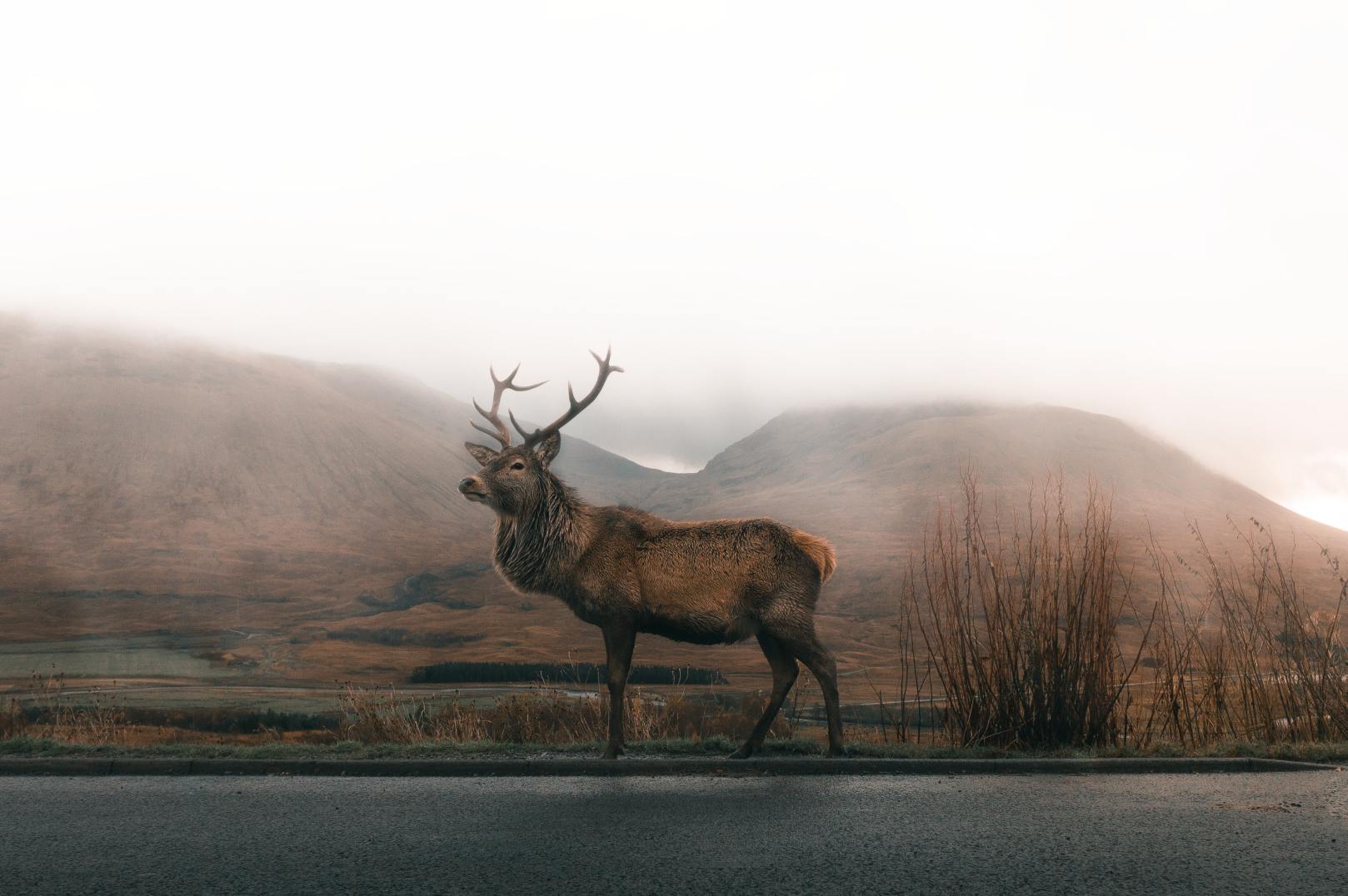
In a warm and rainy jungle, there was a deer that loved to jump. It bounded around the forest like a spring, and could jump higher than any other animal. Because it jumped so much, it grew thick, strong legs. Looking at those legs, the tiger in that jungle became very hungry. So, he made a plan to eat the deer.

The tiger normally hunted by waiting patiently in the darkness of the jungle, then pouncing when an animal came close. He tried this several times on the deer, but the deer was simply too fast. It bounded away each time unharmed.

Then, the tiger thought he might out-run the deer. Yes, it was faster than him, but if it ran long enough, perhaps he could tire out the deer and eat it. So, the next time, after pouncing and missing the deer, he gave pursuit. The tiger chased the deer for a good long while, but the deer was still too strong. Its powerful stride allowed it to continue far after the tiger had lost its breath.

Finally, the tiger enlisted the help of a lioness. He didn’t like to share his prey with another predator, but he thought the extra help might be useful. He told the lioness that he would chase the deer to a place where she could hide — then she should jump out and kill the deer. Although the lioness admired the strength of the deer, she agreed to the plan in order to feed her cubs.

So, the tiger stalked the deer again. Then, he leaped out and engaged in a rapid chase. When he reached the place the lioness was hiding, he roared out. That was the signal for the lioness to attack! The lioness jumped out from behind a rock, but she was too slow. The deer saw this and jumped even higher than the lioness. It leapt to safety on top of a ledge. As it left, its powerful legs dislodged a pile of rocks that fell onto the lioness, injuring her severely. The tiger cursed his luck and stalked away.

After a few moments, the deer came back. It had not meant to harm the lioness, and could see that the she was worried about what would happen to her cubs if she died. The deer went to her side and told her that it would raise her cubs as if they were its own. Although she died, much of the lioness’s anguish was relieved, knowing the deer would be a strong parent for her cubs.

From then on, the deer raised those cubs as if they were fawns. Soon, they were vegetarians, just like the deer. And, like the deer, they learned to leap extraordinarily well. For most of this time, the tiger had left the jungle for a nearby meadow where hunting was easier. But he hated to lose. So, he eventually came back to kill that deer once and for all.

When he entered the forest, he saw a group of powerful lions. Immediately, he thought they could be allies in his plot. Of course, these were the lions raised by the deer, but he did not know that, so he told them his entire plan. One of the lions thought to reject the plan and tell the tiger to leave. However, another thought better of it and agreed to the plan.

So, the tiger chased the deer one final time. They bounded through the forest, the deer ahead and just barely maintaining his lead. Finally, they reached the clearing where the lions waited. The tiger halted: finally his dream of eating that deer would come true. He smiled as the lions took off into the air. Then, he realized they had jumped over the deer. They landed on him and tore him to shreds, tricking him and saving the life of the deer.

The remaining lions and their deer parent pranced through the forest, joyously cavorting past dew covered leaves and tasty flowers for the rest of their lives.
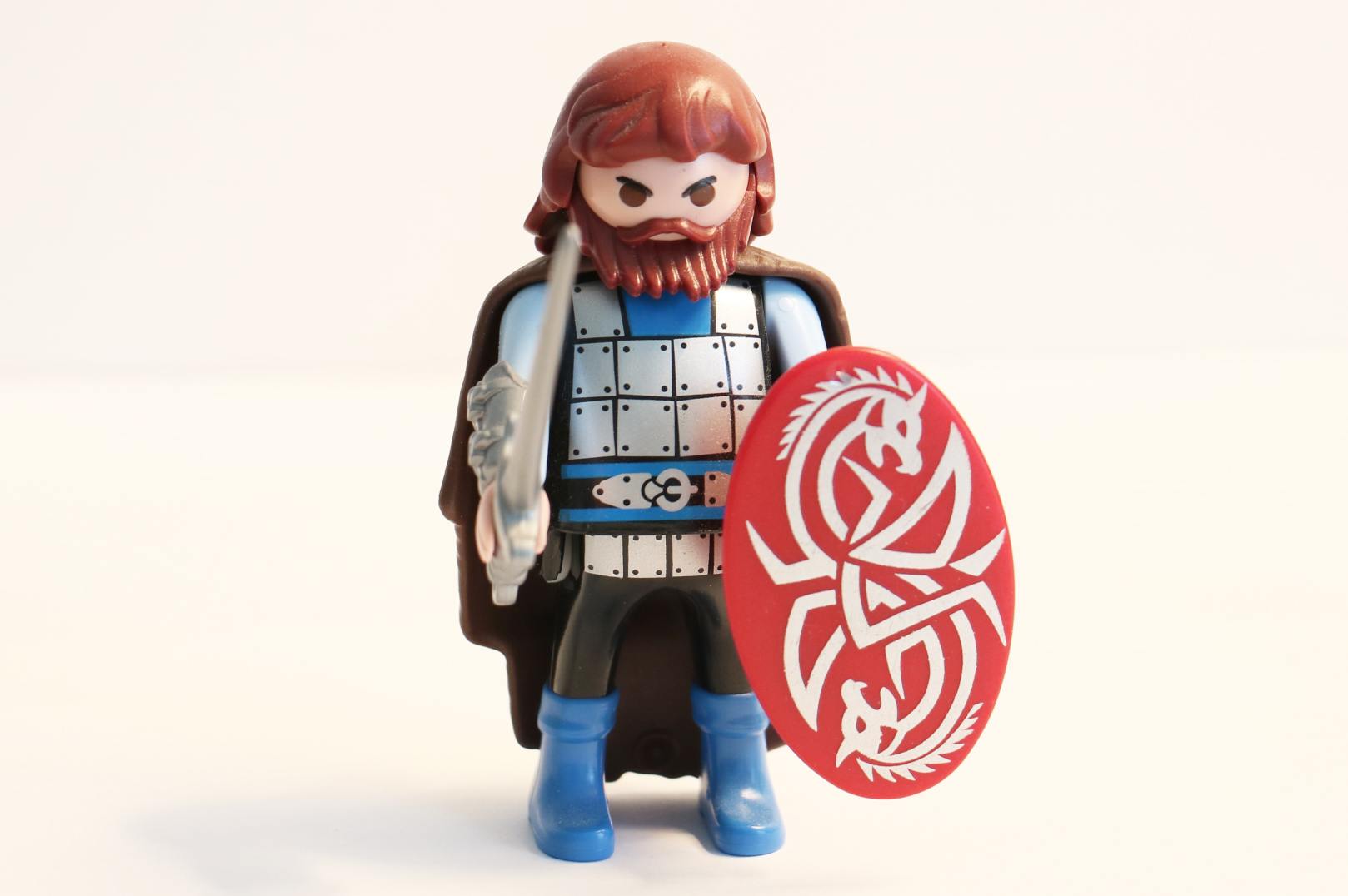

Three Lazy Pigs And The Foolish Knight

Click the play button to listen to this story 🙂

In a forest, there lived three lazy pigs. They needed shelter, so they decided to quickly build a hut of mud and straw. It was horribly ugly, but you have to remember that these were pigs, so they didn’t particularly mind.

One evening, a Knight was passing through the forrest. When he saw the hovel in the dimming light, it looked incredibly eerie. Based on his instincts, he assumed there was a witch inside, drew his sword, and slowly approached the pigs’ abode. Meanwhile, the pigs were resting in their home, boiling a pot of tea. When they saw the Knight approaching with his sharp blade held high, the pigs began to panic. The ungodly noise of the squealing pigs combined with the bubbling and hissing of the teapot painted a clear image in the mind of the Knight — there was *definitely* a witch in that hovel.

He roared as he charged forward, “Horrid witch, I have come to slay thee and free the forrest from thine evil grasp!”

Hastily, the pigs closed the door, and the Knight’s sword became jammed in the bits of mud, stone, and tangled twigs that comprised it. When he heard the Knight’s cry, the cleverest of the pigs had an idea. He quickly told his brothers to let him climb on their shoulders. They let him do this, then he draped a large black rug over all three of them. When the Knight finally freed his sword from the muck with a reverberant slorp, the pigs appeared to him a bonafide hunchbacked witch, cloak and all.

“I curse thee, fool Knight, to turn into a salamander!”

Then the knight felt glass breaking against his armor, and a stinging hot liquid crashed across his flesh. As the liquid seeped through the armor, he could feel the metal getting very hot, as if he were melting and turning into a lizard. Horrified, he ran away as quickly as he could, to dive in the nearest river and wash off the potion he must surely have been doused with.

Of course, the pigs knew it had just been tea. But to a man who thought a hovel like their’s must house a witch, burning liquids from robed figures must be terrible potions. The pigs laughed about it afterwards, and the knight, now drenched and freezing from his dive into a river, trekked through the night to reach the nearest town.

He was a sorry figure the next morning, his armor still leaking and the feather on his helmet bent and broken. The villagers felt bad for him, and tended to him as he rested in their town. After all, there weren’t many folks who went through their neck of the woods. And, as they did with all travelers, they asked him to regale them with news from the broader world.

The knight told them that the news was terrible: a witch had taken residence in their humble forrest! Most of the villagers were initially skeptical, but the man took of his helmet and showed them where his flesh had been cut and burnt by the pig’s tea. It really did look rather scaly. So, coming from a noble and well-spoken figure like the knight, the villagers were convinced, and began avoiding the part of the woods where the Pigs’ hovel lay.

This turn of events was of great benefit to the pigs. For several months, they did not have to worry about people. They bathed in the sun, frolicked through the mud, ate mushrooms, and did all the other things happy pigs do. Because there were no natural predators there (man had long since slain all the wolves), the only real worry they had in life was predation from humans.

Or, at least the turn of events had been of great benefit to them, up till a point. Eventually, news of the witch spread from that village to other nearby townships. The people grew antsy, and soon there was a mob ready to strike out against the witch. Men baring pitchforks and torches descended upon the forest, looking to destroy the hovel and its inhabitants. A group of men, buff as butchers, and with an equal amount of sharp pointy metal found the right place with the help of the knight. Slowly they closed upon the hut in a big circle. They opened the door. The pigs didn’t wake up. Silence.

The leading man was dumbfounded to look inside and see not a haggard witch, but three happy and well fed pigs. He called the others over to look inside too.

“Maybe it’s a trick.”
“Yeah, I reckon a witch could turn ‘erself in to a pig!”
“But three pigs? How could a witch turn ‘erself into three pigs?”
“Darn, that’s a good point. One witch could ‘ardly be three pigs.”

The other villagers quietly mumbled their assent at this sagely bit of algebra, then muddled about in confusion trying to determine what to do. By this point, the Knight (who had previously kept a healthy distance from the hut, to save from being turned into a Salamander) reached the front of the crowd and was able to see the situation inside the hut. He said, “Why, it’s clear what happened. The witch was far bigger than any of these three pigs. At least twice their size. So she must have captured three children and turned them into pigs!”

This made sense to the villagers, who began to weep at the horrible fate of those children. They took the pigs up gently in their arms, careful not to disturb their sleep, and carried them back to the village.

From that day on, the pigs were raised like humans, and — quite to the their delight — given ample food to eat. They went on to live long and happy lives together in the village. Funnily enough, the whole thing turned out to be useful to the villagers too. When real children misbehaved, their parents would point to the pigs and explain that’s what witches did to bad kids. Really helped with discipline. And the Knight, of course, was hailed as a hero who rescued those three cursed waifs.

So, in the end, things turned out well for all. Well, all except the hovel, which was declared a den of evil and burned to the ground. But, it was a horribly ugly hovel, after all, so that’s probably for the best.

Flower In The Valley

Click the play button to listen to this story 🙂

In a cold valley between two mountains, there was a single bright flower. It was an unusual flower, not because of any physical defect — it too had the perfect beauty gifted to all flowers — but because it bloomed late. As its brothers and sisters passed in the autumn, it emerged from the soil. It was not until early winter that it flowered. And with each passing day, it suffered, losing a bit of its color to the lonely cold. Even as it paled though, it stood out as the sole red flame on a cold canvas of white sky and white earth.

There also lived a family in this valley, though it was the only one: a mother, a father, and two kids. Their life was a burdensome one, because life in the valley was tough. Sun and food were scarce. The whole family, even the children, worked all day — chopping wood, tracking game, hunting food. This was particularly imperative as the year turned to that last gray season. In the darkest days of the winter, there would be no prey to catch. They had to stockpile food now.

The children had been sent out by their parents to collect much needed rations, when they walked by the plain where the flower resided. At first, they trudged towards it hoping it was the blood of some slain and forgotten animal, an easy meal. But as they inched towards it, and its shape grew clearer, their curiosity grew. Although they had been wary at first — a harmed beast might be alive still, and dangerous in its desperation, so they had approached slowly — they ran towards it once they saw it was a flower. Filled with wonder, they grinned. A flower in the winter! They danced around the blossom, as if taking warmth by its color and its reminder of a warmer time. Then they plucked it, and took it home.

When the children arrived back at their cottage, it was night. They had between them not a single piece of food to add to the stores — only one lowly flower. Their parents were furious. They yelled at the kids for shirking their duties and made them sleep outside, denying them the warmth of the fire. Before they left for their frigid vigil, their mother snatched the flower from them and threw it to a snowbank outside their window. Between their tears, they could not see where it had been flung, and the flower was lost.

In a way, perhaps, the parents had been right; they did face a harsh season. In the depths of the winter, the days grew darker. Food ran low. Tensions ran high. For some reason, lost to time, the children and their parents got into a heated argument. Ultimately, though, it was driven by the starvation and the lightless cold. There was screaming, and then the children left the house, running deep into the valley.

At first, the father did not pursue to bring them back. Although it had begun to snow, he was too angry to think straight. Let them run, and be cold, and come back knowing that he was right. But they did not come back. And the snow fell harder. And before long, a full blizzard had kicked up. By this point, reason had trickled back to the man. Seeing his wife beside herself with worry, and seeing the cold, cruel weather outside, his heart thawed and he went to look for his children. He could not find them.

In the thick of the snow, the children could hardly see around them. They were wrapped in a mirthless sheet of symmetric white. Every direction was the same, and the wind had shuffled the snow and erased their footprints. Their anger gave way to fear. The tears that ran down their cheeks quickly froze.

As the snow was whipped by the winds, the flower had been unearthed, and was carried about by the breeze. The man had just about given up his search when he saw it. Suspended in the air, it clung to his memory like a last reminder of his children and the terrible mistake of his anger. The flower had made them so happy. Why couldn’t he have been kinder to them then?

When the wind began to blow the beautiful red thing away from him, he ran after it like a mad man. It was one of those senseless things that people do in desperation — a movement born of pure passion and instinct. The flicker of red in front of him led him deeper into the storm.

The children had just about given up, and reached the state of tiredness where the tears ceased to flow. As many people put into circumstances far harsher than reasonable for their age, they suddenly acted like much older people, achieving a sense of acceptance of their fate and place in the world. So, when the flicker of red drifted into view, they took no consideration of exhaustion or hopelessness. They simply took off after the one beautiful thing they had found in the bleached expanse of life.

It was a miracle that the man found his two kids, and once he did, he led them back home. It was a hungry winter, but they didn’t argue after that. And once the spring came, their father smiled and allowed them a day to go pick the red flowers that had bloomed. In a cold valley, between two mountains, it was a single bright day.

The City Of The Blue Flower

Click the play button to listen to this story 🙂

The color blue is rare in nature. It is much easier for plants and animals to make other colors — there are far more chemicals that are red or yellow or pink or green, than are blue. Of course, some animals still manage to be blue, but they have to use a trick. Rather than make blue pigments, which are very difficult to synthesize, they are structurally blue. This means they are blue because of the way light reflects off of them. If you crush up a bluebird’s feathers, a hydrangea’s petals, or a butterfly’s wings and try to paint with those colors, the blue would be all gone, because you destroyed the structure.

There is, however, one one place in the world, where blue pigments are found in abundance: the city of the blue flower. People from all over the world would visit that city. Merchants would buy the beautiful blue color to sell far and wide. Zoologists would come to study the unique blue creatures that thrived upon the flower. Romantics and poets would come to fall in love with the beautiful people who adorned themselves with the flower, who ate it and turned their own skin a beautiful dark blue. And artists would come to make blue paints and paint the most elegant city in the world.

Of course, many people had tried to take the flowers from that city and plant them in their own villages, so as to capture a little bit of the city’s splendor. Unfortunately, almost as soon as the buds were placed in foreign ground, they died. The city was situated at the mouth of a river, and was one of the few places where the minerals needed to form the pigment and the nutrients needed to feed the flower coexisted. In nearby towns, they slowly lost their color and wilted. Farther still, and the tropical climate which sustained the plants — each sunny day followed by a downpour, and each downpour followed by a sunny day, and each as beautiful as the flowers — that tropical climate faded, and the flowers saw a swifter end.

The fact that these flowers could only grow in their native land conferred many advantages upon the city, and many people who tried to take the flower and grow it elsewhere grew resentful. Eventually, one of the kings of that kingdom was incensed that he could not bring the blue flower back to the capital. Seeing that his city could not have the flower’s beauty, he decided that no city should have the flower’s beauty.

He sent his soldiers to salt the earth, dam the water, and cover the fields in ice and snow from the north. The people of the city pleaded with him, but to no avail. He was bent on destroying the flower, and his word was the law. The land wilted under his thumb.

Still, the people of the city would not give up so easily. Even as their city and their flower died around them, they managed to save eight of the flowers from destruction. They quietly nurtured them, saving them for the day that the king’s soldiers would leave. A year later, the king withdrew his troops. The land had been decimated, and the blue flower removed. But the city was quick to action. They began re-cultivating the flower, and with it they re-grew hope in the city. A measure of prosperity returned, and the people were happy.

The king was not. He fumed in his palace, at the insolence he saw unfolding. Gathering his troops, he moved to nip the flower in the bud. When he returned to the city, he made sure not just to crush the flowers, but also the people. He was horrific and decisive in his action, and he made sure that the people would not disobey him again.

Still, the people of the city would not give up so easily. Although the king had been more thorough, combing through the city to eliminate every last floret, one flower had slipped through his fingers. The city council decided to plant the flower in the house of the oldest man in the city. He was an expert botanist, having cared for the flowers the longest of any person in the city. His house was a shanty, and the soil under his house was one of the few patches of ground that remained untouched. His house was in the middle of the city, lost among the throng, so that it was nigh impossible to find. But, perhaps most important of all, he was a man of honesty and resolve. It would be easy for most people to sell that final flower and make a handsome profit, or, fearing for their lives, to turn that flower in to the king. But that old man was not the kind to give in to temptation.

That man and his family toiled, day after day, year after year, to keep that flower healthy. Each year, they collected its seeds, keeping them carefully. And they waited. For years and years, they waited. For the land to recover. For the people to forget the King’s wrath. For the king to die.

And finally, the king did die, replaced by a far fairer monarch, and the old man distributed the seeds he had gathered among all the people of the city. That one flower became many, and the city once again became the city of the blue flower.

To this day, the people respect that old man and his family, for he kept that single, fragile blue flame of hope alive. A man of his care is just as rare as a pigment of color blue.

Ants, Men, And Giants

Click the play button to listen to this story 🙂

Not long ago, people used to be the size of ants. They lived in tiny cities, with minuscule buildings. The blades of grass towered over them like trees.

Many parts of that life were beautiful, like being able to see the morning dew up close, or being able to ride caterpillars like they were horses. But that small size also caused a lot of problems. People were often trampled on by deer. They could be eaten or swatted away. And, perhaps worst of all, inconsiderate animals would cover entire cities in poop, destroying them in the stinkiest way possible.

At some point, the people of one city grew tired of the mayhem and sought a way out. They decided to convene leaders from all over the world to tackle the problem of being too small. Scientists, kings, engineers, and craftsman all brought to their city in order to face humanity’s greatest challenge. It was a brilliant dream. There was only one problem: because people were so small, the distance between cities was huge — far too large for people to cross on foot. How could they get the word out everywhere and to everyone?

The people of that city worked tirelessly to make solutions to this new problem. They tried catapults and cannons. They experimented with gliders and flying machines. They tried everything they could think of. Then, one day, a clever fellow thought to hitch a ride on a deer. It sped across the countryside, and he was easily able to reach a far away town. Admittedly, getting back took a fair bit longer, because you can’t exactly steer a deer. But he had done it, and the transportation problem was solved.

The city sent teams of people out on each and every animal they saw. Deers, buffalo, birds, dogs — you name it. They rode on these animals in burr like contraptions. And when the burrs fell off, the people inside got out and trekked to the nearest city. Once there, they spread the word of the meeting, then recruited more help, built more burrs, and continued their mission in farther towns. In this way, they reached every citizen of every city in the world.

A few years later, the world’s myriad leaders in every imaginable discipline gathered in a meeting in that fateful city. There, they discussed how to solve the problems that faced them. One of the first proposals was to get rid of all the animals. This was supported by a lot of folks, as the animals had inflicted a lot of harm on the humans. A great number of cities had been trampled or pooped to death. But the prudent heads prevailed. Ultimately, killing all the animals would have been a bad thing to do. The animals did things the world needed — like fertilize the soil — and they could be very useful to humans. After all, without animals it would have been very hard to reach all the world’s leaders. Not only that, but it would be unfair and cause an undue amount of harm on all the creatures of the world.

So, they went on to other proposals. Another popular one was to build giant robotic suits for everyone. It was a very fun idea, and the engineers loved it. Unfortunately, this plan also had problems. People in giant mechatronic suits can’t exactly live in tiny homes and tiny cities, after all.

They realized they needed to make everything bigger. Not just the people, but the cities they lived in. So, they decided upon a final plan: they would make a growth ray to turn everyone and their stuff bigger. With hard work and perseverance, the growth ray was completed in a few years. There was rejoicing across the world, and humans came to be the size we know and love today.

Society worked a lot better. That is, it worked a lot better until somebody decided to use the growth ray twice. Then, he became a giant. With his enormous size, he trampled people like the animals had before and sowed chaos across the land. To fight him, they created another giant.

The two behemoths battled for days, trading blows and roiling the land. In the ebb and flow of the battle, it sometimes looked like the evil giant would win, only for the good giant to beat him back. Eventually, they found their way to the peak of a dangerous mountain.

The sky was black and filled with lightning. The good giant was losing again. The evil giant pushed him forward, and they neared the edge of a cliff. Despite his best efforts, the good giant knew the next punch would send him falling down into the abyss. So, when he saw it coming, he grabbed the evil giant’s arm, and they both fell off the mountain.

Neither of the giants was ever seen again. It is believed that they both perished, and that the good giant gave his life to protect the land he loved. To make sure his sacrifice was not in vain, mankind destroyed the growth ray and made sure no giant roamed the land ever again.

It is tempting to want to be bigger or smaller. But always remember that there is a reason for the way things are. We are, in all, exactly the right size.

When The Sloth Was Fast

Click the play button to listen to this story 🙂

Once upon a time, the sloth was the most dangerous animal in the Savannah. It was as fast as a cheetah, as strong as a bear, and as loud as a lion. In fact, it ate lions for breakfast. (And most other animals for lunch and dinner.)

This had become a big problem, and all the other animals gathered to figure out how to save themselves from the sloth. They knew the sloth was very prideful, boasted a lot, and thought he was the best at everything. They were sure that if they beat him in a competition, they could get him to leave.

So, the fastest Cheetah in the Savannah volunteered to face the sloth. He went to the sloth and said, “I am the fastest Cheetah in the Savannah. I bet I am even faster than you.”
The sloth replied, “let’s race and find out who’s faster. But if I beat you, I eat you.”
“Fine,” the Cheetah replied, “but if I beat you, you’ll leave the Savannah.”

All the animals lined up to see the Sloth and the Cheetah race. When they started, they both took off with lightning speed. It was like Sonic racing The Flash. Nobody could tell who would win. By the finish line, however, the sloth was the clear winner by a large margin. He ate the Cheetah.

So, the animals needed a new champion. A shark volunteered to race the sloth. “Even if he is the fastest on land, there’s no way he is the fastest in the water.”
He went to the Sloth and said, “I am the fastest shark in Africa. I bet I am even faster than you.”
The sloth replied, “let’s race and find out who’s faster. But if I beat you, I eat you.”
“Fine,” the Shark replied, “but if I beat you, you’ll leave the Savannah.”

All the animals lined up on the shore to see the Sloth and the shark race. When they started, they were both like torpedoes tearing through the water. Nobody could tell who would win. By the finish line, however, the sloth was swimming faster than a boat, and was the clear winner by a large margin. He ate the shark.

So, the animals reconvened. This time, the loudest lion in the Savannah stepped forward. He went to the Sloth and said, “I am the loudest lion in the Savannah. I bet I am even louder than you.”
The sloth replied, “let’s have a competition and find out. But if I beat you, I eat you.”
“Fine,” the lion replied, “but if I beat you, you’ll leave the Savannah.”

All the animals made a big circle around the sloth and the lion to hear them roar. The lion roared first. He roared so loudly that many of the baby animals started to cry and the older animals held their ears in pain. Then it was the sloth’s turn. He roared so loudly that the lion went deaf. Then he ate the lion.

“My god, the Sloth is good at everything! We need to find something that nature would not let him be good at.” So, they sent the tallest giraffe in the Savannah to face down the sloth.
The sloth looked up at him and said, “If I beat you, I eat you.”
“Fine,” the giraffe replied, “but if I beat you, you’ll leave the Savannah.”

So, they held a competition to measure the sloth and the giraffe while all the animals spectated. A pair of monkeys held a rope, and one swung all the way up the Giraffe’s neck to take his measure. The giraffe was taller than a house! The monkeys started grinning — there was no way the Sloth could be taller than that. They would finally be free.

Then it was the Sloth’s turn. The sloth stretched himself out, and kept stretching and stretching until he was taller than the Giraffe. He ate the giraffe.

“Perhaps he can stretch himself up and down,” the animals thought, “but not side to side.” So, the fattest hippo in the Savannah decided to take on the sloth. When the sloth was bathing in the river, the hippo waddled up to him and said, “I am the fattest hippo in the Savannah. I bet –“
Before the hippo could finish, the sloth interrupted, “If I beat you, I eat you.”
“Fine,” the hippo replied, “but if I beat you, you’ll leave the Savannah.”

So, the monkey swung around again as the rest of the animals watched. The hippo was as wide and round as a boulder. The sloth ate him in one gulp, and was then wider than the hippo.

It carried on like this for months, with all the animals offering up their talents, only to be bested by the sloth. It was only after all the other animals were bested that a wrinkly old elephant spoke up. He was scrawny for an elephant and not much to look at. When he proposed that he face the sloth, the other animals sighed. They figured that, at that point, it couldn’t hurt to try.

So, the elephant went to the Sloth, and said, “I am the oldest and wisest elephant in the Savannah. I bet I can remember more than you.”
“If I beat you, I eat you.”
“If I beat you, you leave the Savannah.”

And so, the various animals found themselves lined up in front of the Sloth and the elephant, although not all the animals came this time. The elephant began telling stories about the history of the Savannah. Of the kingly lions who had ruled over it before, of the the beautiful torrents of the monsoon and the lush foliage it allowed for, of the fires that raged for miles and bathed everything in their crimson hue. He showed them the proof of his stories too, like the layer of ash that could be found by digging deep enough into the dirt. He even told of the days of his youth, when there were far more animals and no sloth. (Leaving out, however, that the two of those things were related.) And so, he spun his tale to the various animals assembled before him for several days and nights. The crowds grew every night, and before long all the animals stood before him in awe.

Then, it was the Sloth’s turn to speak, and it was his turn to be awed. He was silent. The elephant knew of a time even before the sloth. And so the sloth was bested.

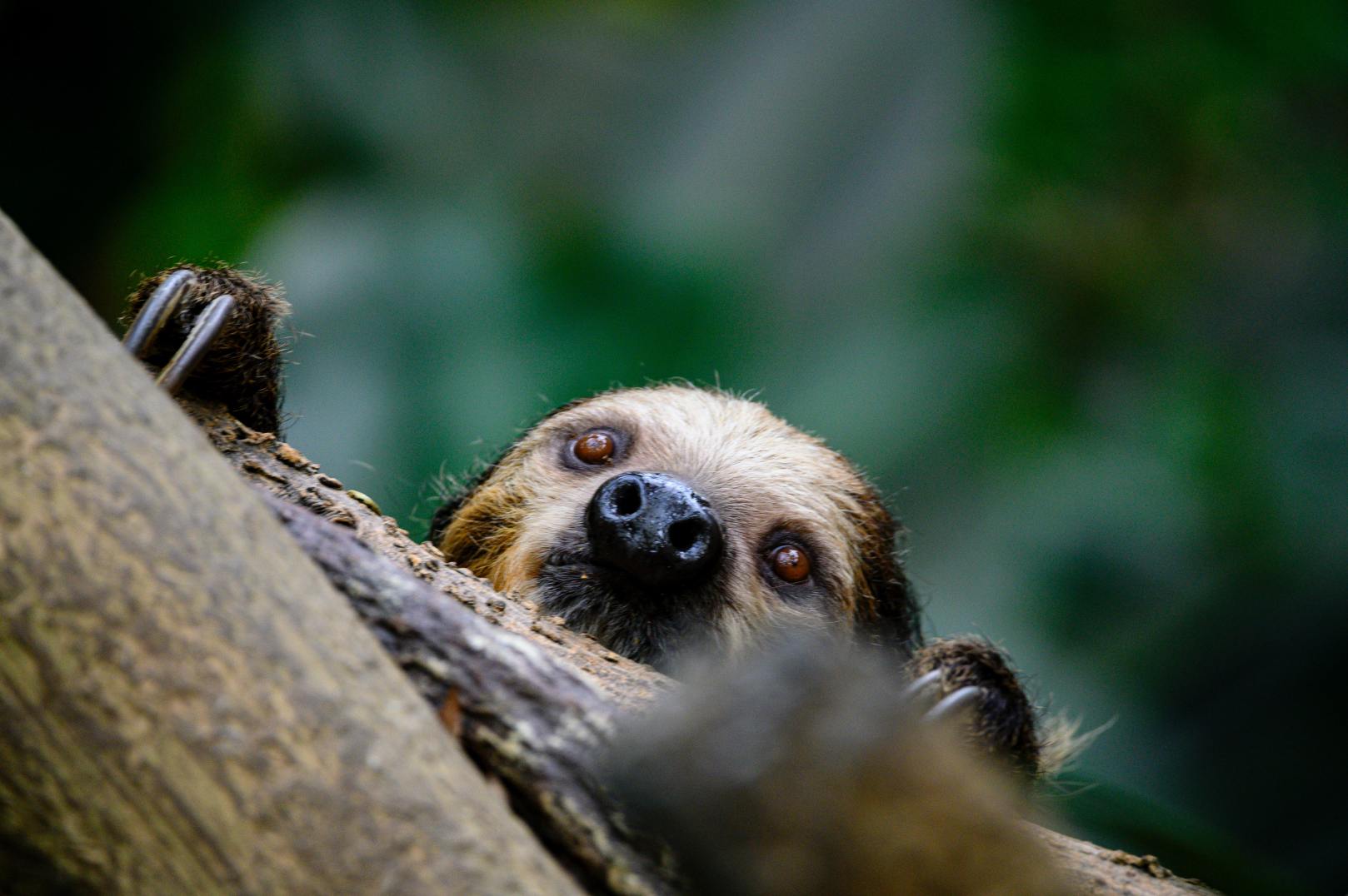
That is why there are no sloths in Africa today — they fled to South America and gave up their various talents for a life of quiet, slow meditation and eating leaves in the trees. It’s better this way.